monroe county, indiana solid waste management district
Web design by rosenplotdesign.com
©2011 The District
Chat live with The District
Chat live with the District on Facebook Connect with the District on Twitter
Join the conversation! Chat live with The District on Facebook and Twitter.
Chat live with the District on Facebook Connect with the District on Twitter
Hours of Operation
Hazardous Materials in your Home
2012 Price List
Battery Collection
Sharps
Pharmaceuticals
Paint Exchange
Mercury
Household Batteries
Freon Appliances
Gasoline
Electronics
Automotive & Petroleum
Asbestos in the Home
Aerosols
Universal Waste
Automotive & Petroleum Products Disposal
For more information, please call 812.349.2848 or click here to send an email.
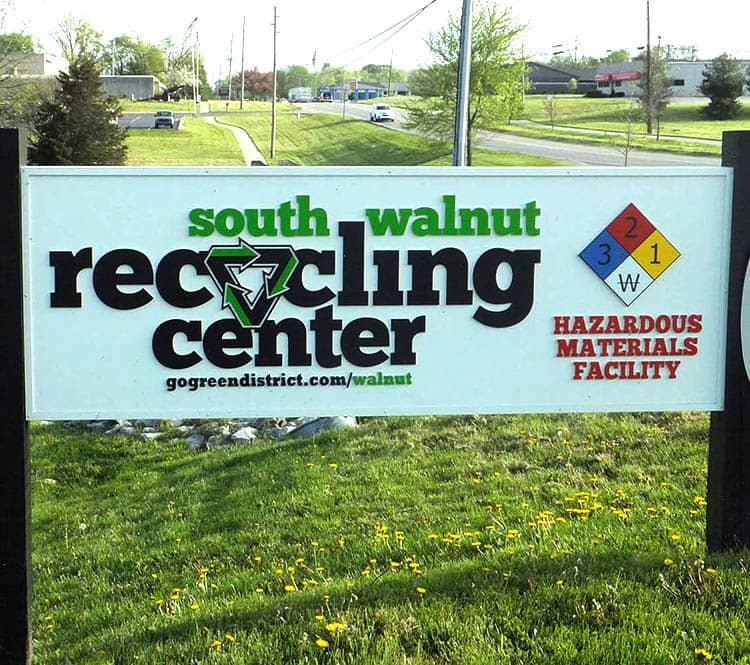
The Hazardous Materials facility is your place for recycling, reuse, and proper disposal of your hazardous materials. Electronics, Freon appliances, household materials including pharmaceuticals, medical aids, paints, cleaners, and other common substances are hazardous waste that can pollute our soil, water, and air.
ACCEPTED AT CENTRAL RECYCLING & REUSE ONLY
Click here for information about this location.

Used Motor Oil, Antifreeze and Oil Filter
Pour them into their designated tank or drum. The containers you store oil or antifreeze in cannot be recycled. They are normal household trash.
A variety of toxic products are associated with the operation of cars, trucks, motorcycles, snowmobiles, lawn mowers, chain saws, and other equipment using petroleum products. Motor oil, antifreeze, transmission fluid, brake fluid, lead acid batteries, gasoline and other fuels may be highly flammable as well as toxic. Extreme caution should be taken when handling these materials. They may be a hazard to health and the environment if disposed of improperly.

NEVER DISPOSE OF ANY OF THESE PRODUCTS BY POURING THEM ON THE GROUND OR DOWN THE DRAIN OR THROWING THEM IN THE TRASH.

Used motor oil pollutes our water. Nearly every household in the United States generates used motor oil. Automobiles and light trucks produce over 600 million gallons of used oil annually. According to the U.S. Environmental Protection Agency, over 200 million gallons of this oil is tossed into the trash, spilled onto the ground or poured down drains and sewers each year. The catastrophic EXXON Valdez spill was small compared to the amount of oil dumped into backyards, ditches, and farm fields by Do-It-Yourself (DIY) oil changers.

During use, motor oil comes in contact with bearings, seals and other engine parts which add heavy metals and other contaminants considered hazardous to humans. So improper disposal creates a real threat to human health. Used oil dumped onto the ground reduces soil productivity, contaminates groundwater, and can poison fish and other wildlife.

Just one gallon of used motor oil can ruin a million gallons of fresh water—an entire year's supply of drinking water for 50 people!


Used Motor Oil
Used motor oil is an especially common waste product. Improperly discarded oil is a significant pollution problem across the United States. The oil drained from your car can be reprocessed and reused, thus conserving pertroleum resources and preventing contamination of the environment. Used motor oil should be put in a sealed container, such as a milk jug with a cap, and taken to an oil recycling center.

NEVER DUMP GASOLINE, HERBICIDES, PESTICIDES, PAINTS, SOLVENTS, OR OTHER NON-PETROLEUM PRODUCTS IN OIL THAT IS TO BE RECYCLED. Once added, they may permanently contaminate the oil, making it unusable.


Transmission and Brake Fluid
Transmission fluid is similar to motor oil and can be added to oil recycling.

Re-refined oil decreases our dependency on foreign oil.

Recycling used motor oil decreases our dependency on natural resources and conserves energy. Three times more energy is used to process crude oil than to re-refine used oil. By recycling, the U.S. can save thousands of barrels of oil per day. It takes just one gallon of used oil, compared with 42 gallons of crude oil, to produce the same 2.5 quarts of lubricating oil. As for quality, today's re-refined oil products meet or exceed the same stringent performance standards that apply to virgin oil products.

Recycling oil filters saves resources & energy
Americans change over 400 million oil filters a year! These filters contain a high steel content and additional motor oil, both easily recycled. If all of the oil filters manufactured in 1994 had been recycled, an estimated 161,500 tons of steel could have been recovered and 17.8 million gallons of used oil would have been kept out of our fields and waterways.

Unfortunately, most used oil filters are not recycled, so the oil they contain is released into the environment. Currently, 90% of do-it-yourselfers throw their filters in the trash, sending about 10 million gallons of used oil to landfills every year.


Antifreeze
Antifreeze contains the chemical ethylene glycol, which poses a potential health hazard to humans and animals. Its sweet taste and smell make it attractive to children and pets.

NEVER POUR OLD ANTIFREEZE IN A POP BOTTLE OR LET IT FORM A PUDDLE IN THE DRIVEWAY.

Antifreeze can pollute ground, surface, and drinking water supplies if poured into storm sewers or dumped on the ground. Some service stations now recycle used antifreeze. Check with local gas stations or radiator repair shops for an antifreeze recycler near you.

If you cannot find anyone to recycle your antifreeze, you may be able to dispose of a SMALL—up to a quart—quantity of antifreeze by pouring it down the drain with lots of water. But, if you are on a city sewer service, you should call your waster water treatment plant to be sure the system can handle antifreeze.
WARNING: If you have a septic system, be aware that antifreeze can overwhelm the organisms in the system. No more than a quart at a time, mixed with generous quantities of water, should be disposed of in one week. This means if you have four quarts, you would dispose of it over a period of four weeks.

Recovering antifreeze is easy & economical
U.S. cars generate over 60 million gallons of used antifreeze each year. Most antifreeze contains the poisonous chemical ethylene glycol. Like motor oil, used antifreeze also collects hazardous contaminants from the engine during use. Antifreeze has a sweet taste which attracts children and pets. It may cause injury or death through ingestion, inhalation or skin absorption.
In the past, disposal of used ethylene glycol has included treating it as a hazardous waste, discharging it into municipal sewer systems, or illegally pouring it into dry wells and storm drains. These methods of disposal are no longer necessary because now antifreeze can be recycled easily and inexpensively.

Automotive Batteries
• Wet Cell
• Used car batteries
• Sealed lead acid batteries

Automotive batteries pose a hazard because of the toxicity and corrosiveness of the acid and metals in them. Marine, tractor, lawn mower, motorcycle, and other vehicle and equipment batteries should be taken to the Hazardous Material Facility. Click here for location information.

Contact the District
The District's Adopt-A-Road Program
Green Business Network with the District
Waste Services through the District
Recycling Information for The District
Education through the District
About the District
The District - Where Green Living Begins • 812.349.2020 • 3400 S. Walnut Street, Bloomington, IN 47401